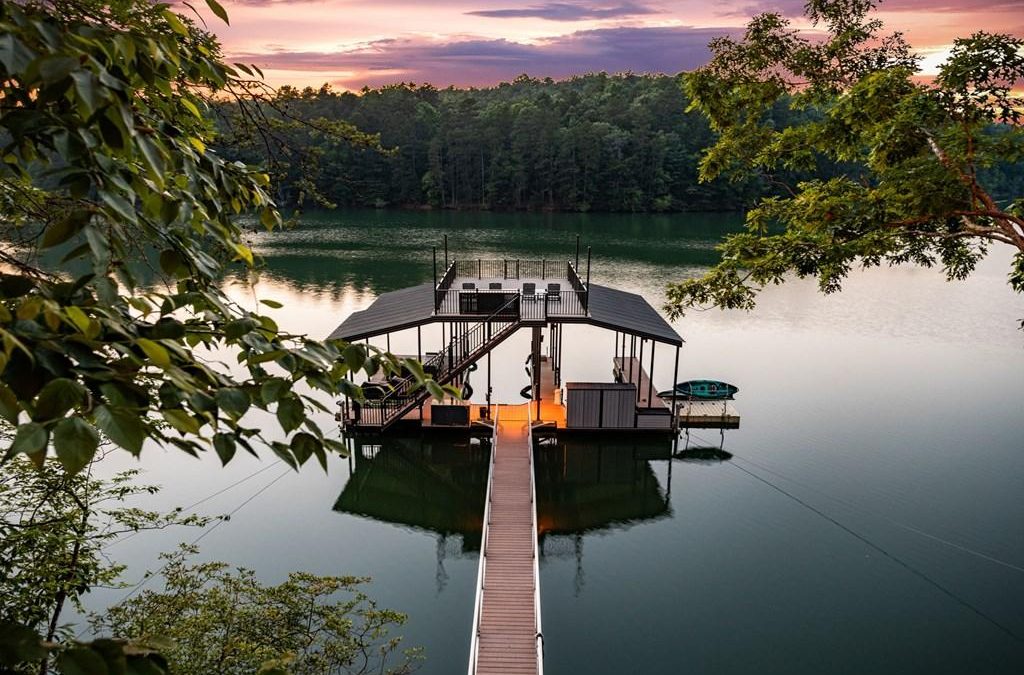
Choosing a Boat Lift Material Is About More Than “Steel vs. Aluminum”
If you own waterfront property in Oregon or Washington, a boat lift is one of the best ways to protect your boat, simplify loading, and keep your shoreline experience enjoyable. But the first big decision most owners face is this:
Should your boat lift be galvanized steel or aluminum?
At KC Marine LLC, we work across freshwater lakes, rivers, brackish water, and saltwater environment, and we hear the same two concerns from clients over and over: durability and price. The truth is: both galvanized and aluminum lifts can be excellent. The right choice depends on your boat, your water, and how you plan to use your dock and lift over time.
This guide breaks down the differences in plain terms—so you can make a confident, long-term decision.
Quick Definitions: What “Galvanized” and “Aluminum” Mean
Galvanized (Steel) Boat Lifts
A “galvanized” lift is typically a steel lift coated with zinc (hot-dip galvanizing). The zinc layer helps protect the steel from rust and corrosion.
Aluminum Boat Lifts
Aluminum lifts are built from marine-grade aluminum, commonly 6061 (or equivalent), chosen for its strength-to-weight ratio and resistance to corrosion.
Durability: Which Material Holds Up Better?
When clients ask “Which is more durable?” the most accurate answer is: durable against what?
Strength & Load Capacity: Advantage Galvanized Steel (Especially for Heavy Boats)
Galvanized steel lifts are generally stronger than aluminum in terms of raw structural capacity. For heavier boats or yachts—especially over 10,000 lbs—steel is often the preferred route because it handles high loads more comfortably.
If you’re lifting a large, heavy vessel and want maximum structural confidence, steel is often the right conversation to have first.
Corrosion & Long-Term Longevity: Advantage Marine-Grade Aluminum
For many waterfront homes, the bigger threat isn’t load—it’s corrosion, especially in:
In these conditions, marine-grade aluminum (6061 or equivalent) typically offers superior longevity against corrosion. Even with galvanizing, salt and spray can eventually eat through steel, increasing maintenance costs over time.
Bottom line:
Price: Upfront Cost vs. Long-Term Cost of Ownership
Price is often the deciding factor, and it can be confusing because the “cheapest” option upfront isn’t always cheapest over the life of the lift.
Upfront Pricing: It Depends on the Lift and Features
Upfront costs can vary widely depending on:
In practice, boat lifts can be similarly priced depending on the specific product and configuration.
Steel vs. Aluminum on Docks and Structures
While lift pricing can overlap, it’s worth noting a broader trend we see on many projects:
Maintenance Costs: Environment Can Make Steel More Expensive Long-Term
Where steel can become costly is ongoing maintenance in corrosive settings. In saltwater and high-spray environments, steel may require more attention over time as corrosion protection systems get challenged. Epoxy coatings and sacrificial zinc anodes can offer an additional layer of protection and longevity in saltwater environments.
That doesn’t mean steel is a “bad” option, it means environment matters, and long-term value should be part of the decision.
Environment Matters Most (Especially in Oregon & Washington)
The Pacific Northwest gives us almost every scenario: lakes, rivers, tidal areas, and harsh seasonal weather. That’s why we always bring the conversation back to where and how the lift will live.
Here are the biggest environmental factors that impact the galvanized vs. aluminum decision:
1) Saltwater, Brackish Water, or Heavy Spray
If your property sees salt influence or constant spray, aluminum is often the safer long-term material from a corrosion standpoint. Steel with zinc anodes and an epoxy coating will offer superior protection to solely galvanized steel.
2) Freshwater (Lakes & Rivers)
Freshwater can be friendly to both materials, so the decision often comes down to:
3) Water Fluctuation
Water fluctuation affects:
This is where experience matters, because a lift that looks “right” on paper can be wrong in real shoreline conditions.
4) Harsh Weather Exposure
Wind, storm debris, and seasonal patterns affect both the lift and your docking system. Material choice is one piece, proper sizing, anchoring, and install quality are just as important.
When KC Marine LLC Recommends Galvanized Steel
Although we typically recommend aluminum for most cases, there are clear scenarios where steel makes sense, especially when it delivers the best blend of strength and cost.
A good example is the HydroHoist UltraLift, which can be a strong, reliable, and economic option in the right application.
Steel tends to be a strong fit when:
When KC Marine LLC Recommends Aluminum
Aluminum often wins when the lift will live in challenging, corrosive conditions and the goal is a long-lived system with less material-related maintenance.
Aluminum tends to be a strong fit when:
Don’t Forget the Canopy Conversation (Lift Covers & Dock Canopies)
Many lift buyers are also thinking about protection from sun, rain, and debris (especially trees). If you’re planning on adding a boat lift canopy or dock canopy cover, that should be discussed early because it can influence:
In Oregon and Washington, canopies are a major value-add for keeping your boat clean, protected, and ready to use.
The 4 Key Factors to Evaluate Before You Decide
If you’re choosing between galvanized and aluminum, these are the factors we recommend weighing first:
The Best Advice: Match the Material to the Waterfront, Not Just the Boat
A lift isn’t a standalone purchase—it’s part of a waterfront system. The best results come from matching material and design to:
That’s why we encourage boat owners to check with an experienced marine construction company before deciding.
Call KC Marine LLC: Get the Right Lift (and Canopy) for Your Waterfront
If you’re deciding between galvanized vs. aluminum boat lifts in Oregon or Washington, KC Marine LLC can help you evaluate your site conditions and choose the best long-term solution—whether that means aluminum, steel, or a specific lift system designed for your application.
📞 Oregon: 971-409-3430
📞 Washington: 253-886-2553
🌐 Visit: https://www.kcmarinellc.com
Featured Snippet (≈175 words)
When choosing between a galvanized steel and aluminum boat lift, the right option depends on your boat, budget, and—most importantly—your waterfront environment. Galvanized steel lifts are generally stronger than aluminum and are often the best fit for heavier boats and yachts (especially 10,000+ lbs). Marine-grade aluminum lifts (commonly 6061 or equivalent) are known for superior corrosion resistance, especially in splash zones and areas exposed to spray, brackish water, or saltwater.
At KC Marine LLC, we work throughout Oregon and Washington in freshwater, rivers, brackish, and saltwater environments. While we often recommend aluminum for long-term corrosion performance, steel can be an excellent choice in certain applications—such as the HydroHoist UltraLift, which offers a strong, reliable, and economic lift option when conditions and boat weight support it. The best approach is to evaluate environmental conditions, water fluctuation, budget, and whether your system is seasonal or permanent.
📞 OR: 971-409-3430 | WA: 253-886-2553 | 🌐 kcmarinellc.com
Subscribe now to keep reading and get access to the full archive.